SYNCHRONISING STRATEGY & STORY

Next generation strategic communication. Crafting storylines, strategic narrative & narrative strategy. Consulting, coaching & training. For smart leaders working on mission-critical projects.

SELECTED CLIENTS

EXPLORE OUR OFFERINGS

Over the decades, I’ve worked on a range of strategy and story projects, with clients across creative and commercial industries — a few of which are below. Over time, my work has evolved into what I now call an applied narratology: the practical craft of communication and storytelling, a mode of critical thinking, and ultimately, a conscious form of worlding — how stories shape relations, decisions, and actions.

It turns out we really are Homo narrans after all.


— Steve Seager, Founder, The House of Narratology

"It matters what stories make worlds, what worlds make stories.”

Donna J. Haraway, Distinguished Professor Emerita in the History of Consciousness Department, University of California

A cosmic tango…

The stories we’re born into, our perception, our social environment, these things do not exist in isolation. They are entangled in a kind of cosmic tango—perpetually acting, reacting, interacting. 1,2,3

Stories are not static artefacts. They are shadows of our cognition—emergent, morphing over time, coalescing into narratives, then dissipating, reconfiguring over time. 3,4

The stories we encounter each day focus our attention, rippling through our sense of what’s relevant and real. 5

Stories scaffold and afford the creation of reality. 6

STORIES
SCAFFOLD
REALITY

“How do we think our way through the messes we’re in when the way we think is part of the mess?”

Nora Bateson, filmmaker, writer, educator, President, Bateson Institute

Weirdly North Atlantic

The cultural context we’re born into rewires our brains, biology, and psychology — entraining us into particular ways of seeing and sense-making. It shapes how we understand identity, leadership, strategy, and our relationship with the planet.7,8

If you were raised in a WEIRD (Western, educated, industrialised, rich and democratic) society, you’re likely strong in analytical thinking and weaker in relational thinking. You’ll default to North Atlantic myths and metaphors, with the Hero’s Journey as your go-to story structure.”7, 11, 12

We help you recognise these inherited patterns — and explore alternatives better suited to our complex reality. 9, 10

EVOLVE &
ELEVATE
SENSE-MAKING

"As a species, we don’t just use stories to communicate with, we use them to think and adapt with."

Steve Seager, Founder, Principal, The House of Narratology

A very applied narratology

As homo narrans, we’re deeply shaped by the stories baked into our upbringing, education, media, organisations, and systems. They condition how we make sense of the world—and limit what we can see.13,14

Practical and pluralistic, our form of applied narratology helps reveal what today’s dominant narratives conceal.15

We help leaders craft alternative stories about their organisations, their worlds, and their role in it—opening new insight, creating new possibilities to shape the world around us. This is innovation, just not as you’ve experienced it before.

STORIES
TO BUILD
WORLDS WITH

What is applied narratology?

Welcome, Fellow Traveller —

The classical definition of narratology is the study of narrative, its structures, and their effects on perception. Traditionally, it focuses on literary, film, and media texts.

Our applied narratology focuses on narrative in practice: the patterns stories take, how they interact with human cognition, and how they actively shape the worlds we inhabit and create — a process Donna Haraway calls worlding.

It rests on three foundations.

Practice. Over thirty years of transdisciplinary strategy and story work across EMENA, spanning cultures, industries, and sectors. A praxis forged in contexts where consequences are concrete, immediate, and often high-stakes.

Theory. Informed by narratology, management theory, cognitive science, complexity science, post-humanist ecofeminism, and related fields concerned with how humans construct, convey, and transform meaning.

Nous. An embodied perceptual capacity to sense narrative structure — the equivalent of a musician’s ear, an architect’s eye, or a dancer’s body. The ability to perceive pattern, rhythm, coherence, and possibility before the words arrive.

We work with leaders and organisations through consulting, coaching, and training, applying this craft directly to mission-critical challenges in strategy, leadership, organisations, communication, and complex decision-making — and helping others do the same.

Our practical craft offers leaders, strategists, and communicators a distinct set of benefits:

  • It improves critical and creative thinking, logic, pattern recognition, and reframing ability.
  • It helps you formulate more effective strategy, especially in complex contexts.
  • It supports the design of more effective narrative strategy.
  • It helps you communicate with greater clarity, coherence, and impact.

In my experience, getting to grips with the principles and practices of our applied narratology changes the way you see, think, and act in the world.

Over time, you become a savvier sense-maker, a cannier strategist, a more adaptive leader — and, naturally, a more impactful storyteller.

I hope we get the chance to work together.

Be splendid.

— Steve

OUR PEOPLE

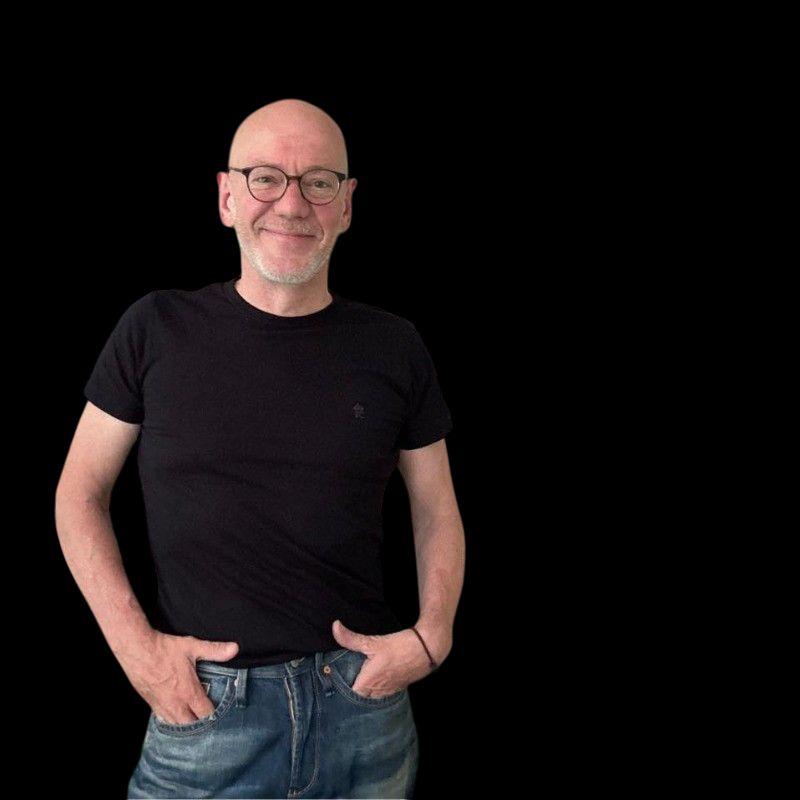
Steve Seager

Founder, Principal

Our founder, narratologist, strategist, and sense-maker in Chief. After 30 years in the field, he has an uncanny knack of finding the red thread of client challenges in a heartbeat. Innately curious, unwittingly eclectic, Steve is empathic, fast, and fun to work with. Go read his Field Notes on Substack for his unfettered thoughts on life, the universe and everything.

Michiel Gaasterland profile picture

Michiel Gaasterland

Partner, Practice Lead

Michiel has worked with world-renowned musicians, rebuilt iconic brands, grown a startup from scratch to acquisition, advised C-suites, and mentored senior leaders. Michiel brings clarity and focus, but also excitement, scale and momentum to our work. He loves public speaking and turning complex ideas into something others can connect with.

OUR THINKING

Subscribe to our newsletter. Get our thoughts, news and stories straight to your inbox. We're starting nice and slow so you can expect us to contact you no more than once a month. We'll let you know if that should change. As ever, you can opt out any time at the click of a button.

CURIOUS? LET'S CHAT

REACH OUT VIA WHATSAPP

Fancy a chat just to feel things out? Contact Steve, our principal on steve@narratology.house, or Michiel, our practice lead, on michiel@narratology.house. You can also send Michiel a text message via +31651198091 or book a discovery call to speak face-to-face.

Site references

1. Clark, A., & Chalmers, D. J. (1998). The extended mind. Analysis, 58(1), 7–19. https://www.alice.id.tue.nl/references/clark-chalmers-1998.pdf

2. Clark, A. (1997). Being there: Putting brain, body, and world together again. MIT Press. https://mitpress.mit.edu/9780262531566/being-there/

3. Stewart, J., Gapenne, O., & Di Paolo, E. A. (Eds.). (2010). Enaction: Toward a new paradigm for cognitive science. MIT Press. https://doi.org/10.7551/mitpress/9780262014601.001.0001

4. Varela, F. J., Thompson, E., & Rosch, E. (1991). The embodied mind: Cognitive science and human experience. MIT Press. https://mitpress.mit.edu/9780262529365/the-embodied-mind/

5. Gibson, J. J. (1986). The ecological approach to visual perception. Lawrence Erlbaum. (Original work published 1979). https://doi.org/10.4324/9780203767764

6. Matuschak, A. (2024, April 15). Cognitive scaffolding. Retrieved from https://notes.andymatuschak.org/Cognitive_scaffolding

7. Henrich, J., Heine, S. J., & Norenzayan, A. (2010). The weirdest people in the world? Behavioral and Brain Sciences, 33(2–3), 61–83. https://doi.org/10.1017/S0140525X0999152X

8. Gould, R. K. (2025). Relationality is not WEIRD: The importance of relational thinking for sustainability science. Sustainability Science, 20(1), 103–117. https://doi.org/10.1080/26395916.2024.2427810

9. Zak, P. J. (2015). Why inspiring stories make us react: The neuroscience of narrative. Cerebrum, 2015, cer-12-15. https://doi.org/10.1016/j.cortex.2014.11.009

10. Green, M. C., & Brock, T. C. (2000). The role of transportation in the persuasiveness of public narratives. Journal of Personality and Social Psychology, 79(5), 701–721. https://doi.org/10.1037/0022-3514.79.5.701

11. Lakoff, G., & Johnson, M. (1980). Metaphors we live by. University of Chicago Press. https://doi.org/10.7208/chicago/9780226470993.001.0001

12. Lakoff, G. (1987). Women, fire, and dangerous things: What categories reveal about the mind. University of Chicago Press. https://doi.org/10.7208/chicago/9780226471013.001.0001

13. Niles, J. D. (1999). Homo narrans: The poetics and anthropology of oral literature. University of Pennsylvania Press. https://doi.org/10.9783/9781512803051

14. Plummer, K. (2023). We are, it seems, homo narrans: Humankind the narrators and storytellers. Sexualities, 26(5–6), 657–668. https://doi.org/10.1177/13634607231171383

15. Herman, D. (2003). Narrative theory and the cognitive sciences. In D. Herman (Ed.), Narrative theory and the cognitive sciences (pp. 163–192). CSLI Publications. https://www.researchgate.net/publication/232446193_Narrative_Theory_and_the_Cognitive_Sciences