
Three systemic threads of the North Atlantic knowledge practice bind discourse and thinking in this part of the world: Scientific rationalism, epistemic imperialism, and institutions and markets. Together, they shape dominant societal narratives — and our cognition.
This is Part 2 in an emergent series on the North Atlantic knowledge practice. Part 1 — The North Atlantic (& Other) Knowledge Practices — introduced the idea of a knowledge practice and what it might look like in different forms.
Thinking in terms of a knowledge practice helps reveal that what feels entirely natural, normal and common sense is often anything but. Instead, it is shaped by deep cultural habits, historical forces, and power structures.
As you know, the North Atlantic knowledge practice refers to the dominant institutionalised way of producing, validating and distributing knowledge in the North Atlantic region of Britain, The Netherlands, France, Germany and later; the United States.
This practice has origins in enlightenment rationality, modern Western science and philosophy, colonial histories and power structures, the Industrial Revolution and its economic context, the academic institutional model that evolved out of that context — and the commercial, media and other instruments through to the present day.
It is a potent systemic brew.
Evolving over hundreds of years, the North Atlantic knowledge practice — a term coined by Dutch intercultural anthropologist Wim van Binsbergen — manifests itself as a complex adaptive system, multiple threads, flows and fields, all acting, interacting and reacting.
There are multiple ways of reading and configuring them. Van Binsbergen’s work moves across many terrains — ethnography, intercultural philosophy, comparative mythology, and long-range epistemic analysis. It is (a) wonderful reading.
What I offer here is a partial reading that moves in parallel, tracing similar dynamics through a narratological lens.
To do that, I’m going to consider what we might think of as three heuristic “macro threads” of the North Atlantic knowledge practice, and how they function.
(Note: Rather than “threads” I actually conceptualise these as currents within a “flowfield”. Flowfields are my term for discursive ecologies threaded through social life, within which various currents of constraint move. They set the conditions under which stories, metaphors, and narratives gather and stabilise for a time, before dissipating or reconfiguring as flows shift. Like water that self-organises bio-geochemically — concentrating nutrients, sparking blooms, creating dead zones — discourse, too, nourishes, suffocates, redistributes, and reorganises as part of a larger system. More another time.)
My purpose is not so much to fix and define these threads [sic], but trace a basic anatomy and convey a sense of their systemic operation and, over time, we will explore more of their impact on today’s discourse, cognition, and therefore; worlding  The ongoing, situated practice of bringing worlds into being through the relations, stories, and material entanglements we participate in (see Donna Haraway).
More than shaping power or knowledge alone, through their emergent metaphors, stories and myths, these threads narratively entrain swathes of society into specific ways of seeing and making sense of the world.
In Juarrero's Alicia Juarrero, PhD, is an Affiliate Scholar in Residence of the Neuroethics Studies Program of the Pellegrino Center for Clinical Bioethics, Georgetown University Medical Center, Washington, DC, where her research focuses upon complex systems’ models of neural processes involved in proto-moral, moral and ethical cognition, emotions and behaviors; and the use of integrative systems’ models and techniques to study and operationalize neuro-cognitive information in various social contexts. (2002) terms, they function as various types of constraints:
- Constitutive constraints (what makes something possible in the first place)
- Enabling and limiting constraints (pruning the field of possible trajectories), and
- Maintaining constraints (what stabilises patterns over time).
The North Atlantic knowledge practice might pan out something like:
- Scientific rationalism as a constitutive constraint on what is thinkable
- Epistemic imperialism as an enabling/limiting (pruning) constraint on what is legitimate and valuable, and
- Institutions and markets as maintaining constraints on what is recognised and sustained.
Let’s take a look.
1. Scientific rationalism: constraining what is thinkable
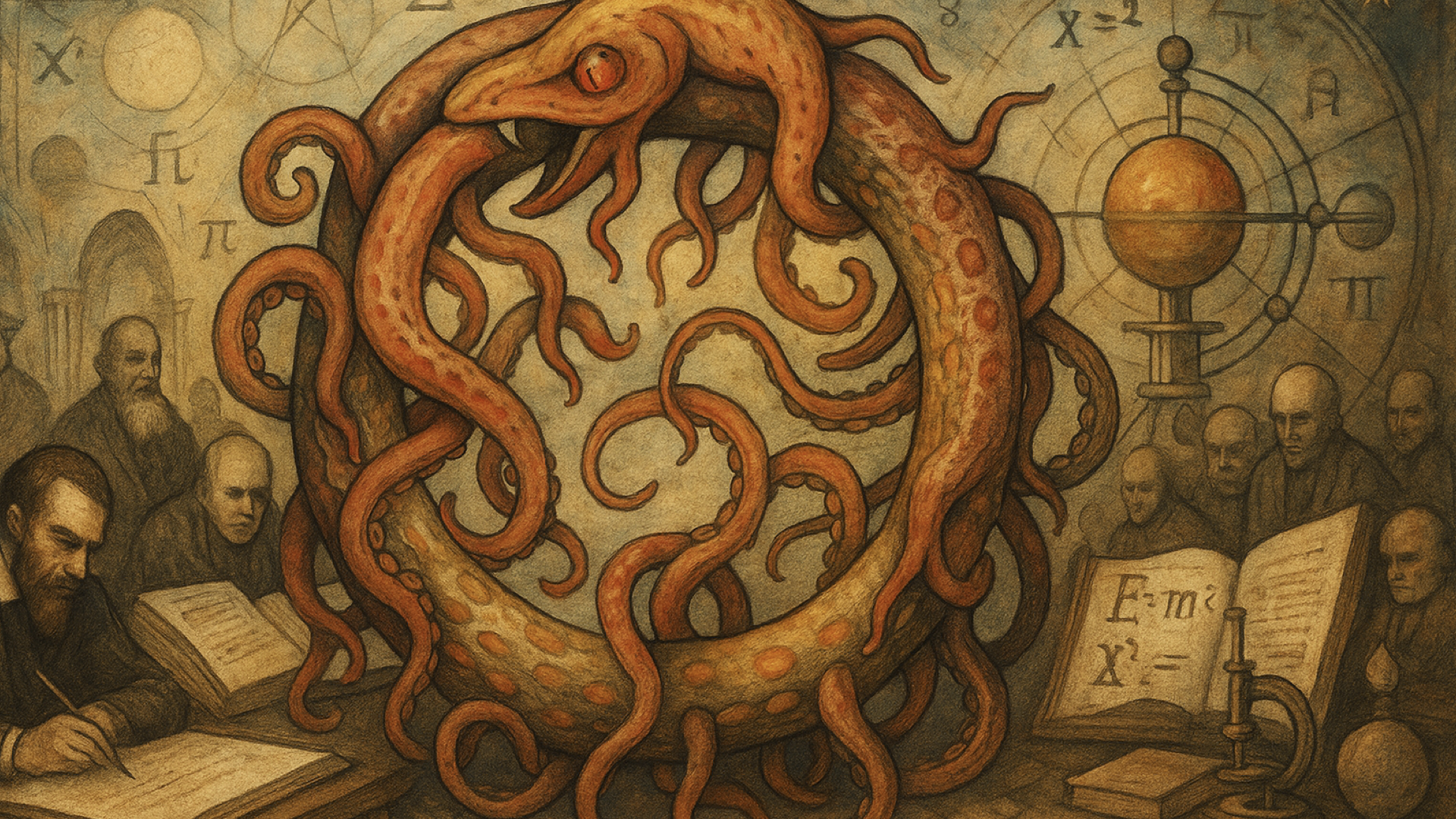
A constitutive constraint doesn’t just limit, it shapes what counts as possible in the first place. Like grammar for a language, it renders some forms of thought intelligible and leaves others unsayable. Rationalism channels inquiry into logical empirical directions, while excluding the kinds of knowledge and being that does not conform to those rules.
In the 1630s and 1640s, Descartes crystallised the rationalist split that structures Western thought to this day. His move to ground knowledge in method and certainty divided the world into dualisms of mind and body, reason and experience, the knowing subject and everything “out there” to be measured. It established the epistemic grammar that modernity — and the North Atlantic knowledge practice — later built upon.
From Descartes through Bacon, Newton, and later Laplace, scientific rationalism privileges reason, logic, and empirical observation as the foundations of legitimate knowledge. It presupposes that objective truth should be generated through systematic inquiry that is quantifiable and repeatable (Harding, 1998). It encompasses both quantitative and qualitative approaches only as long as they remain within the rational method.
This has been the hallmark of the North Atlantic epistemological tradition: knowledge must be testable, modelled, and capable of abstraction in theoretical form.
This rationalist paradigm is indeed enabling — it has given rise to extraordinary explanatory power through hypothesis testing, deductive reasoning, and scientific modelling.
Laplace, in particular, represents its high watermark: the mechanistic, predictive worldview perfected. His famous thought experiment — the idea that a sufficiently informed intelligence could predict the entire future of the universe — is the apex of the early North Atlantic cognitive architecture. A world fully knowable. A world fully calculable. A world without residue.
But rationalism is also constraining. It frames the world as a mechanistic system governed by mathematical laws, primarily linear cause-and-effect logic and falsifiability.
By privileging the rational and the measurable, scientific rationalism sets the boundaries of the thinkable. It defines what can be spoken of as knowledge in the first place.
And in the process, excludes so much of the human experience.
2. Epistemic imperialism: constraining what is legitimate and valuable

Epistemic imperialism acts as an enabling/limiting (pruning) constraint — where imperial logics narrow, filter, and rank what counts as legitimate. It admits only that knowledge that reinforces imperial logics of categorisation and control, while discarding others as illegitimate, inferior, or valueless.
Knowledge production in the North Atlantic was entangled with colonialism from the start. It did not simply describe the world; it actively organised the world of knowledge — as well as the world it claimed to describe.
Classification became a tool of governance: naming, ranking, and categorising colonised peoples, cultures, lands, and resources in ways that made them more legible — and therefore more controllable — to imperial centres.
In practice, this meant that knowledge functioned as an instrument of administration and extraction as much as of understanding, helping colonial authorities justify, coordinate, and extend their power.
The Industrial Revolution intensified this dynamic: Increased demand for resources, labour, and markets fuelled colonial expansion, while colonial systems in turn supplied the raw materials, labour pools, and markets necessary for industrial growth.
The two became mutually reinforcing, symbiotic.
In this context, knowledge was not simply “gathered.” It was extracted, classified, and exported to the metropole — reframed as universal truth (Smith, 1999).
In the process, European thought was not positioned as one worldview among many, but as the worldview — framed as objective, neutral, and universally valid (Quijano, 2000).
Christianity played a significant role.
Long before modern imperialism consolidated itself, the Church acted as a selective force: Defining which cosmologies were legitimate, which were “pagan,” and which needed to be converted, absorbed, or erased.
Missionary activity carried not just religion but an entire hierarchy of knowledge, morality, and civilisation, helping shape the early narrative infrastructure that later imperial systems would formalise and globalise.
It introduced and normalised the binary classifiers that would become foundational to the North Atlantic worldview: Saved/damned, civilised/primitive, rational/irrational, ordered/chaotic.
These binaries did not disappear in modernity; they were simply secularised and redeployed in scientific, political, and organisational life. They provided the cognitive scaffolding through which other cultures, peoples, and knowledge practices were judged, sorted, and placed.
Other epistemologies were relegated to the status of “folk knowledge,” dismissed, co-opted, coerced, or erased outright.
As we’ll look into another time, imperialist logics became deeply embedded in the lexicon of leadership, strategy, and the organisation:
- Military → strategy, front lines, central command
- Political → parties, power, interests, zero-sum games
- Mechanical → organisations as systems to be engineered, measured, managed
Epistemic imperialism constrained legitimacy and value.
It created artificial hierarchies of knowledge, legitimised only what aligned with the North Atlantic worldview, and ensured its dominance across geopolitical and organisational domains — a dominance that continues to this day.
3. Institutions & markets: constraining what is recognised & sustained

In Juarrero’s terms (2002), this is a maintaining constraint: once certain knowledge forms are selected, institutions and markets reinforce them so they persist over time. These constraints stabilise patterns, making them durable, repeatable, and profitable — while pushing alternative ways of knowing to the margins or erasing them entirely.
This third thread lies in the institutionalisation, and later commercialisation, of knowledge.
The university system we recognise today emerged from North Atlantic institutions such as Oxford, the Sorbonne, and later, Harvard. Peer review, disciplinary silos, and academic publishing became not only the means of organising knowledge, but also of defining what counted as knowledge at all (van Binsbergen, 2003).
As these disciplines formed, each developed its own specialised language — terms, symbols, and codes that signalled authority. This brought precision and depth. And it built walls and silos. The white picket fences of academia went up. If you didn’t speak the right academic or professional dialect, you were effectively locked out. Fluency became a proxy for legitimacy — and academia defined what counts as “smart” and, by implication, what does not.
Over time, this institutional system entrenched and sustained the epistemic authority of the North Atlantic. Knowledge from other contexts could only gain legitimacy once translated into the idioms, metaphors of North Atlantic academia and published in elite journals (Smith, 1999).
When alternative epistemologies are considered, they are radically flattened, abstracted, and stripped of their relational and cultural depth to fit neatly inside a bite-sized selection box of “alternative” epistemological flavours — East Asian, Indian, Middle Eastern, and Islamic epistemologies alike.
This flattening dynamic is visible even within North Atlantic traditions themselves.
As Bridgman and Cummings show in their analysis of management theory, core ideas from the majority of contributors to the Western leadership and management canon are routinely misrepresented, simplified, and stripped of their original nuance in order to fit institutional templates, teaching formats, and commercial use-cases.
The institutional machinery rewards legibility over fidelity.
Institutionalisation was only half the story.
With the rise of capitalism, media, and digital platforms, knowledge was commoditised. Research became intellectual property. Theories became frameworks, models, and products. Courses, papers, and consultancy decks were packaged into marketable knowledge nuggets. Metrics-driven startup ecosystems, performance dashboards, and platform logics further normalised a narrow, optimised, and highly codified form of knowledge production.
This carried deep cognitive consequences for those educated within this system.
As Henrich and colleagues have shown, the emergent WEIRD psychology in psychology WEIRD is an acronym for populations that are Western, Educated, Industrialized, Rich, and Democratic. The term was coined in a 2010 paper by researchers Joseph Henrich, Steven Heine, and Ara Norenzayan to highlight a significant bias in psychological research: most studies have historically used participants from these specific societies, who are not representative of humanity as a whole. shaped by these institutions tends toward analytical, decontextualised, and non-relational thinking. This makes it harder for them to perceive relationality, context, and reciprocity, further narrowing what appears intelligible or valuable in their worldview.
Today, large-scale digital platforms — search engines, social media, and now GenAI systems — act as accelerants to this process: ingesting, indexing, and reproducing North Atlantic epistemologies at scale.
Because these systems are trained primarily on data produced within the same epistemic infrastructure, they increasingly learn from — and reinforce — their own outputs.
The feedback loop tightens: platforms normalise the linguistic and conceptual forms the system already privileges; GenAI systems amplify them; and institutional and commercial incentives consolidate them further.
The result is a self-referential ecosystem: institutions define what is legitimate; markets package and monetise it; platforms and models amplify it; and the “interpretariat” I talked of in Part 1 — the consultants, ‘thought leaders’ and influencers commercialising this short-form thought — circulates it as wisdom.
Together they sustain and monetise recognition — ensuring that North Atlantic knowledge not only continues to reproduce itself, but also profits greatly from doing so.
An emotional remainder…
This is an emergent series. That means I literally don’t know where it’s going or where it will stop. I’m writing to find out.
I had a completely different ending prepared for this post. I was going to write of the emergent myths and metaphors from the North Atlantic knowledge practice. But now as I write, I think we will look at something else.
That’s because writing this post was not easy. I had to hold the North Atlantic systemic mechanism in focus while trying not to think too much about its consequences at every bloody turn.
So if something in this post lands uncomfortably with you — a gut-feeling, sadness, recognition, or anger — I’m with you.
I’m not an academic. Feelings are not “extra” to my work. They are very much part of it. Always have been.
A system such as this, that narrows what is legitimate and thinkable, also narrows what can be felt. And I refuse that.
So before we turn to the emergent myths of this practice, in our next post, we’ll pause to acknowledge what this system renders thin — the older myriad membranes of knowledge accrued over millennia that still cling on, shimmering beneath, around, and through it.
We’ll think a little about magic and loss.
For now…
Be splendid.
— Steve
References
- Bacon, F. (1620). Novum Organum. London: John Bill. (Original work published 1620).
https://archive.org/details/1762novumorganum00baco/page/n3/mode/2up - Bridgman, T., & Cummings, S. (2011). Reassessing the foundations: Historical critique and the future of management education. Academy of Management Learning & Education, 10(4), 738–755. https://openaccess.wgtn.ac.nz/articles/journal_contribution/The_relevant_past_why_the_history_of_management_should_be_critical_for_our_future/12736031?file=24106370
- Haraway, D. J. (1991). A cyborg manifesto: Science, technology, and socialist-feminism in the late twentieth century. In Simians, cyborgs, and women: The reinvention of nature (pp. 149–181). New York: Routledge. (Original work published 1985).
https://theanarchistlibrary.org/library/donna-haraway-a-cyborg-manifesto - Harding, S. G. (1998). Is science multicultural? Postcolonialisms, feminisms, and epistemologies. Bloomington: Indiana University Press.
https://archive.org/details/issciencemulticu0000hard - Henrich, J. (2020). The WEIRDest people in the world: How the West became psychologically peculiar and particularly prosperous. New York: Farrar, Straus and Giroux.
https://en.wikipedia.org/wiki/The_WEIRDest_People_in_the_World - Juarrero, A. (2002). Dynamics in action: Intentional behavior as a complex system. Cambridge, MA: MIT Press.
https://aliciajuarrerodotcom1.wordpress.com/wp-content/uploads/2012/02/dynamics-in-action-pdf1.pdf - Laplace, P.-S. (1814). A philosophical essay on probabilities. (F. W. Truscott & F. L. Emory, Trans.). New York: Dover. (Original work published 1814).
https://archive.org/details/philosophicaless00lapl - Lorde, A. (2007). The master’s tools will never dismantle the master’s house. In Sister outsider: Essays and speeches (pp. 110–114). Berkeley, CA: Crossing Press. (Original work published 1984).
https://monoskop.org/images/2/2b/Lorde_Audre_1983_The_Masters_Tools_Will_Never_Dismantle_the_Masters_House.pdf - Quijano, A. (2000). Coloniality of power and Eurocentrism in Latin America. International Sociology, 15(2), 215–232.
https://doi.org/10.1177/0268580900015002005 - Robins, N. (2024). Diviner mind: How organisations can learn from the Indigenous science of uncertainty. Cape Town: Litha Publications.
https://substack.com/inbox/post/177153381 - Smith, L. T. (1999). Decolonizing methodologies: Research and Indigenous peoples. London: Zed Books.
https://books.google.nl/books/about/Decolonizing_Methodologies.html?id=Nad7afStdr8C&redir_esc=y - van Binsbergen, W. M. J. (2003). Intercultural encounters: African and anthropological lessons towards a philosophy of interculturality. Münster: LIT Verlag.
https://lit-verlag.de/isbn/978-3-8258-6783-8/
Leave a reaction and contribute to our blogcast
0 reactions


No comments yet — be the first!